

Introduction
In the dense jungles and limestone plateaus of Mexico’s Yucatán Peninsula, one image rises above all others: a massive feathered serpent carved in stone, its head gripping the base of a grand pyramid. That pyramid is the temple of Kukulkán at Chichén Itzá, and that serpent is the god Kukulkán himself — the plumed or feathered serpent who linked earth and sky, rain and wind, human and divine. To understand Kukulkán is to glimpse how the ancient Maya viewed the world — not in a straight line, but in cycles of creation, renewal, and connection. In this article we’ll look at who Kukulkán was, what he symbolised, how the Maya honoured him, and why his image still captivates visitors and scholars alike.
The Name and Origins
The name Kukulkán comes from the Yucatec Maya language: k’uk’ul meaning “feathered” and kan meaning “snake” or “serpent.” He is the Maya counterpart to the Aztec god Quetzalcoatl — both being feathered-serpent deities. While his worship peaked in the Postclassic period of the Maya, his roots are earlier, reaching back into classic Maya ritual traditions, and he was especially important in the Yucatán region.
Symbolism: Earth, Sky and the Serpent’s Flight
One of the most striking aspects of Kukulkán is his dual nature. The serpent is a creature bound to the earth, its coils hugging ground and cave; the feathers or wings signify sky, wind, the air above. This union of under-earth and over-heaven gave Kukulkán his special place as mediator and creator. He was linked to wind, rain, storms and fertility — essential elements in a land where agriculture, cycles of nature and ritual were deeply intertwined. As such, the great pyramid at Chichén Itzá was more than a monument: it was a symbol and tool of his power. The famous equinox shadow effect on the northern staircase of the pyramid, where the setting sun creates triangular shadows that form the body of a serpent descending, is an architectural homage to Kukulkán’s descent.
Myths and Stories of Kukulkán
Mayan lore gives Kukulkán several mythic roles and stories. One legend tells of Kukulkán being born as a snake, his sister feeding him in a cave, until he grew so large that he left the cave (causing the earth to tremble) and flew out to the sea. Other versions describe him as a winged being who reached toward the sun only to have his tongue burnt, symbolising a contact between earth and celestial fire. Beyond myth, Kukulkán was associated with rulership and power—Maya kings and priests claimed descent, or at least divine favour, from him. His imagery legitimised earthly power by connecting it to cosmic order.
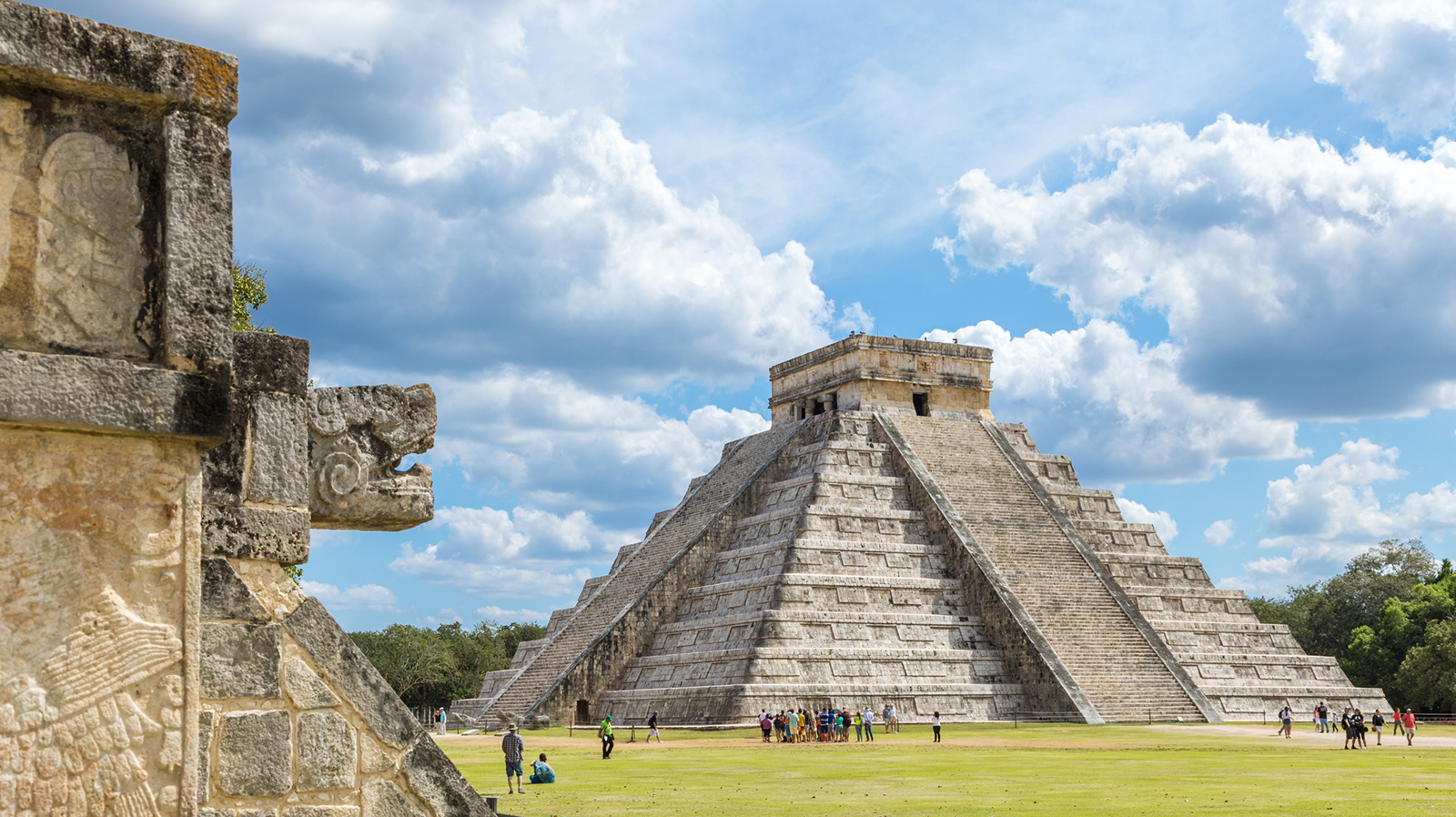
Kukulkán and Architecture: The Pyramid at Chichén Itzá
The temple known as El Castillo or the Pyramid of Kukulkán at Chichén Itzá is perhaps the best testament to the god’s importance. On each of its four sides sit staircases, each with 91 steps, and when combined with the top platform step totals 365 — one for each day of the solar year.
During the equinoxes, the northern staircase plays out a dramatic display: light and shadow conspire to form a serpent slithering downward toward the large carved serpent head at the base of the steps. This effect is an expression of Kukulkán’s descent from sky to earth.
He was more than a deity of myth: the pyramid merges astronomy, calendar, cosmology and ritual into stone, in honour of Kukulkán’s role. The alignment, precision and symbolism all point to the depth of Maya knowledge and spirituality.
Ritual, Worship and the Feathered Serpent Cult
The worship of Kukulkán included offerings, ceremony, and perhaps even sacrifice. While the details are partly lost or fragmentary, we know that major Maya centres built temples dedicated to the feathered serpent. He was considered responsible for bringing wind and rain, essential for agriculture — making him vital in seasonal cycles and for farmers. At Chichén Itzá and other centres the serpent imagery, monumental architecture and ritual all served to reinforce the link between people, land and the divine.
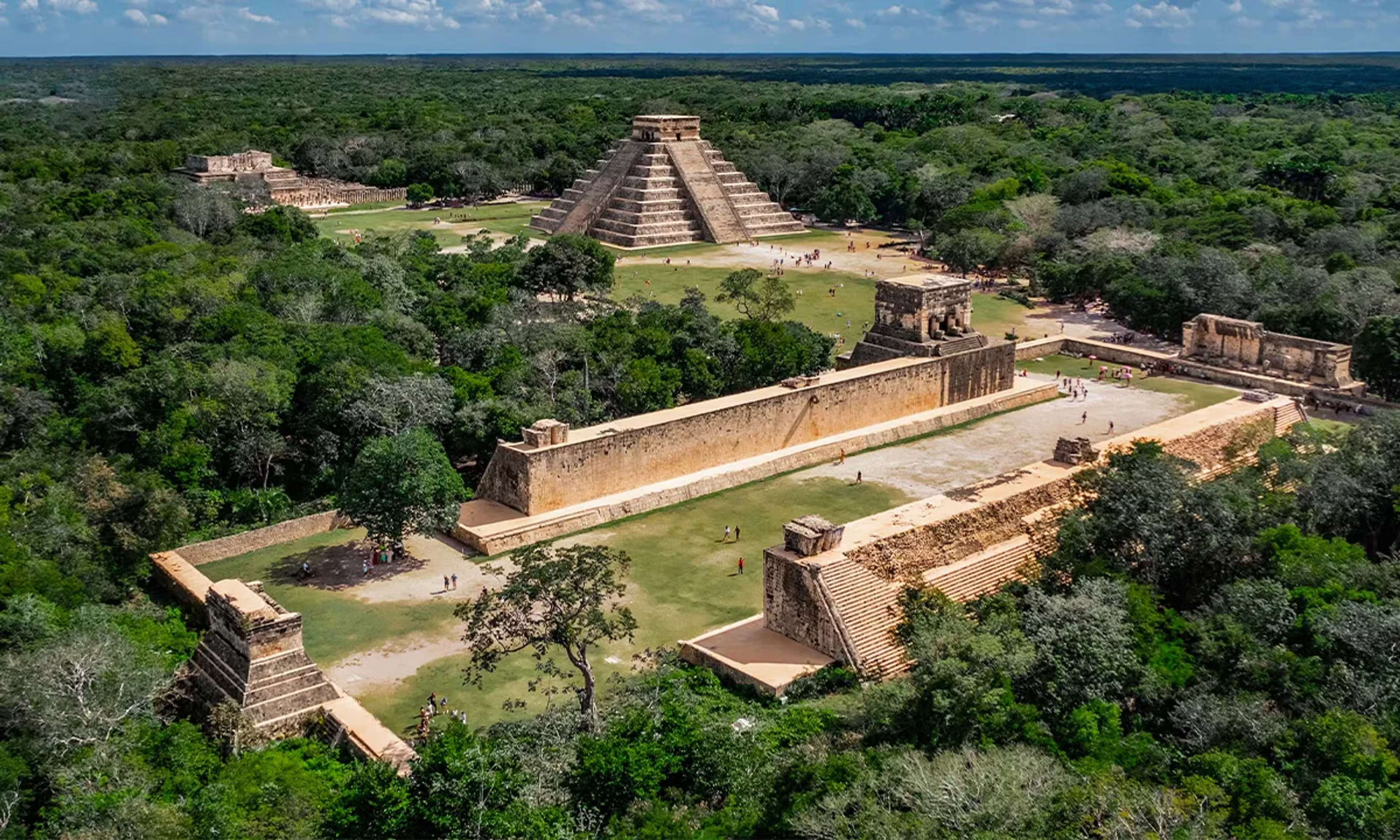
Kukulkán Across Time: Legacy and Modern Resonance
Kukulkán’s influence did not end with the Classic Maya. The image of the feathered serpent recurs across Mesoamerica. His counterpart Quetzalcoatl in Aztec culture carried many of the same attributes: creator, wind-god, civiliser. Today, Kukulkán remains an enduring symbol of Maya identity and cultural heritage: the icon of the pyramid, the serpent descending, the link between earth and sky. The site at Chichén Itzá draws thousands of visitors every year — many drawn by the mythic power of the feathered serpent. Contemporary folklore among Yucatec Maya still recounts stories of Kukulkán’s presence, his tremors in July, or his return.
Why Understanding Kukulkán Matters for Visitors
When visiting the Yucatán region and especially the pyramid of Kukulkán, knowing the story behind the stone adds depth. The monument is not merely impressive architecture; it is a sacred structure honouring a deity whose power shaped views of time, nature and kingship. Understanding Kukulkán:
Highlights how architecture served ritual and calendar, not just aesthetic.
Helps appreciate the symbolic layering: serpent + feathers, earth + sky, ruler + deity.
Opens a window into Maya cosmology: time is cyclical, nature is connected, humans are part of a larger order.
Makes the equinox shadow effect not just “a neat trick” but a demonstration of the carved power of Kukulkán.
Final Thoughts
Kukulkán, the feathered serpent god of the Maya, embodies an ancient worldview in which earth and sky, human and divine, nature and architecture were inseparable. His temple at Chichén Itzá lets us see how the Maya translated belief into stone, ritual into geometry, myth into shadow. For travellers and seekers, understanding Kukulkán transforms a visit from “seeing a pyramid” into “standing where a god once descended”. The serpent’s body of shadows on the stairs, the numbered steps echoing solar years, the carved head at the base: all are signs of a culture that viewed life as cycle, connection and renewal. Whether you walk the plaza of Chichén Itzá in high season or in quiet hours, take a moment to look at the serpent head on the pyramid’s base and remember: this is Kukulkán’s marker, his footprint on earth, his bridge between worlds. In that moment you touch not just stone, but the legacy of a god who soared between elements, between time, between men and heavens.
Tags

PrimeOne Tour
Expert travel guide specializing in Maya culture and history.