

Introduction
El Castillo — the Pyramid of Kukulkán — is more than a striking silhouette on the Yucatán horizon. It is a built book of knowledge: calendar, telescope, stage and temple all rolled into one. Centuries after its construction the pyramid still rewards careful attention. Its proportions, alignments and carved details reveal how Maya architects turned mathematical understanding and ritual meaning into a single monument. This article walks through the major architectural secrets of El Castillo and explains why the structure remains a masterpiece of human ingenuity.
The Pyramid’s Basic Design
Form and scale
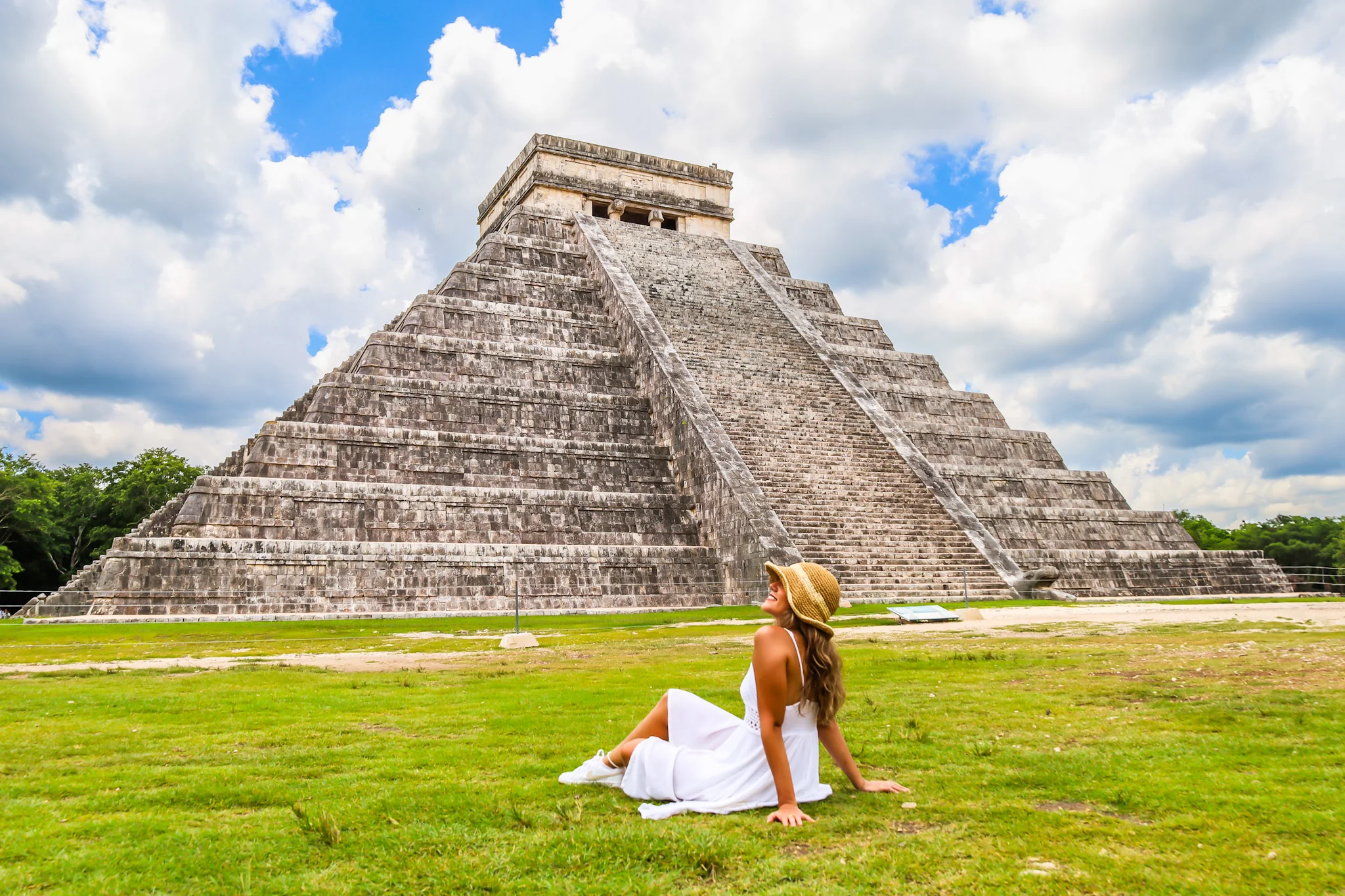
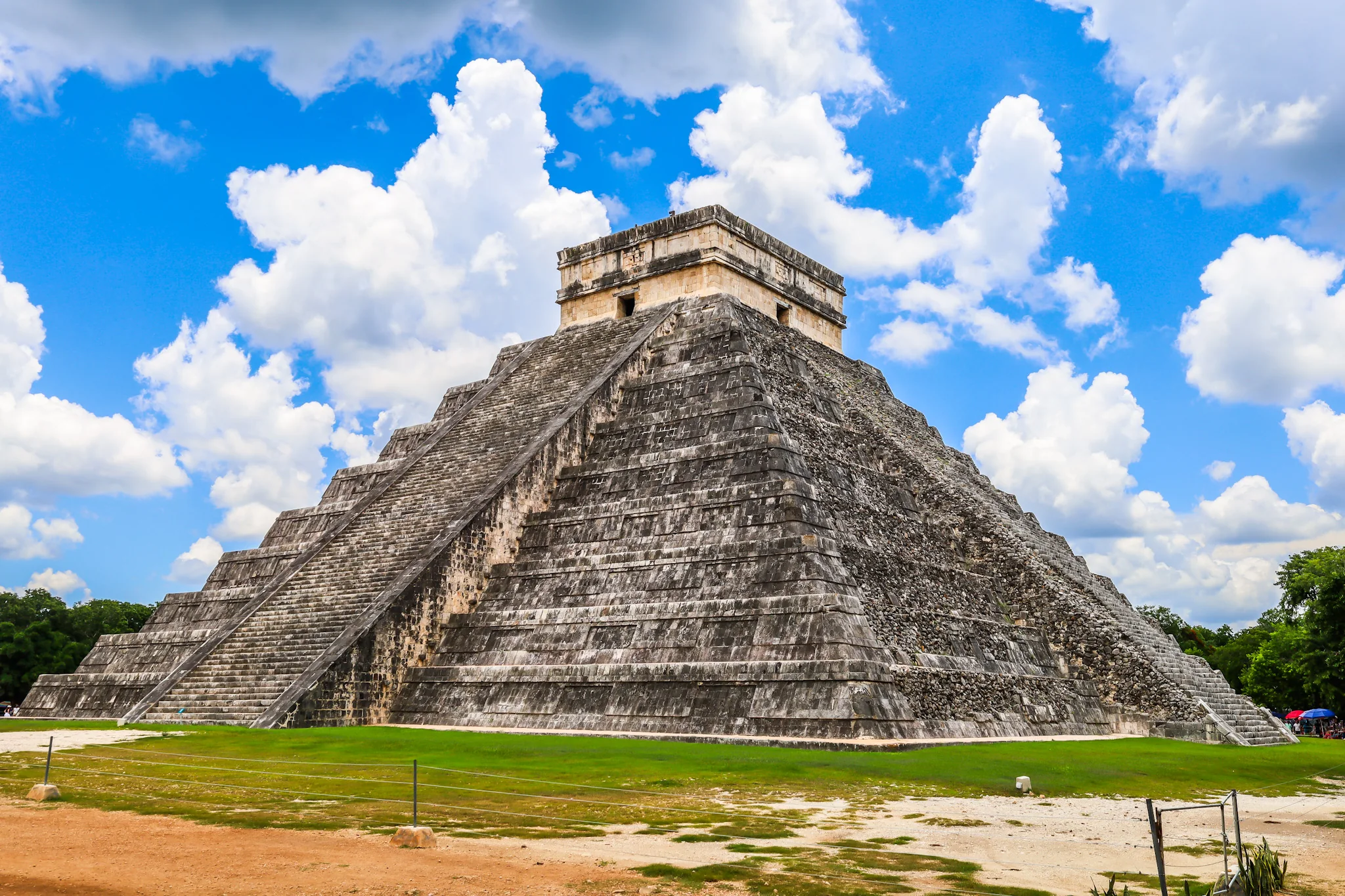
El Castillo rises in a near-perfect square plan with four broad stairways on each face. Each side has 91 steps; when you add the single top platform the total equals 365 — one step for every day of the solar year. The pyramid stands about 24 meters high (not counting the temple on top) and dominates the central plaza of Chichén Itzá, making it visible across the site.
Materials and construction methods
The pyramid was built from local limestone blocks, faced with carefully cut stone. Maya builders used simple tools but sophisticated techniques: leveling with water, carefully fitted masonry, and well-planned drainage to protect the structure from seasonal rains. The visible stonework is the result of repeated renovation phases over many generations.
Calendar and Astronomy Carved in Stone
The solar year in architecture
The 365-step count is an obvious calendar clue, but the pyramid encodes time in other ways too. Four staircases, one per cardinal direction, partition the monument into quarters — a physical representation of the year’s seasons and the compass points that mattered to Maya ritual and agriculture.
The equinox light and shadow effect
Perhaps the most famous phenomenon occurs around the spring and autumn equinoxes. As the late afternoon sun strikes the north-west staircase, a series of triangular shadows forms along the balustrade. These shadows align to create the illusion of a serpent undulating down the steps toward the carved stone head at the base. The effect is produced by precise geometry: the pyramid’s faces, the angle of the sun on equinox days, and the uniform depth of each step. The result is a spectacular demonstration of celestial timing rendered as public ritual.
Sound and Acoustics: The Pyramid That Talks
The chirp effect
El Castillo also played with sound. Clap your hands at the base of the northern staircase and the reflected sound resembles a chirping bird — many guides and researchers liken it to the quetzal, a sacred bird associated with feathered-serpent imagery. This acoustic signature was likely intentional: carved terraces and stepped surfaces create predictable echoes and frequency shifts that ancient builders could manipulate.
Purpose of acoustic design
Sound was part of performance and ritual. Echoes can amplify speech, call attention, and add a supernatural quality to ceremonies. On ceremonial platforms the engineered echoes would have made priestly words carry far and feel otherworldly — an architectural tool to shape human perception.
Symbolic Sculpture and Reliefs
The serpent heads and bas-reliefs
At eye level the pyramid displays large serpent-head sculptures at the base of the staircases. These stone heads anchor the equinox effect visually and symbolically: the shadowed body of the serpent appears to join the carved head. Bas-reliefs across the site portray warriors, jaguars, and cosmological symbols that reinforce the themes of power, renewal and cosmic order.
Numerical and geometric symbolism
Maya architects used numbers deliberately. The 91 steps per side (4 × 91 + 1) produce the 365 count, while other building elements reflect multiples and ratios with ritual meaning. These numeric design choices tie the monument to Maya calendrical systems—long count, haab and tzolk’in—turning architecture into a mnemonic device for complex cycles.
Ritual Pathways and Processional Design
Approach and sightlines
El Castillo’s placement in the plaza creates choreographed sightlines. Visitors and worshippers moving through the site are guided visually toward the pyramid, the ball court and other ceremonial structures. The central axis and plaza act as a stage: processions, offerings and public rites played out along intentional pathways.
The summit temple
At the top sits a small temple — the sacred terminus of ascent. Climbing the staircases (when allowed in earlier times) was part of ritual performance: ascending symbolized moving from earth toward sky, and reaching the temple put the ritual actor in a liminal space, physically closer to the heavens and symbolically closer to the gods.
Engineering for Durability and Climate
Drainage and weatherproofing
The Maya built for a tropical climate with seasonal rains. El Castillo incorporates subtle drainage channels and slope patterns to shed water away from vulnerable seams. Its core masonry and protective facing stones were selected for longevity; maintenance and re-facing over generations kept the form intact.
Foundation strategy
Builders prepared the ground carefully, creating a stable platform over karstic limestone. Foundations address settlement and ensure even load distribution. The pyramid’s long-term stability speaks to pragmatic engineering as much as ritual intent.
Interconnected Complex: How El Castillo Relates to the Site
Spatial relationships
El Castillo is not an isolated object; it anchors a ceremonial network. Nearby structures—the Great Ball Court, the Temple of Warriors, the observatory—form a constellation of ritual and administrative functions. Lines of sight between these buildings reinforce ritual choreography and astronomical alignments.
Urban and social meaning
The pyramid’s scale and centrality broadcast authority. Constructing and maintaining such a monument required labor, resources and social organization. The pyramid therefore signals political power as well as religious devotion: it was a public statement of order and cosmological legitimacy.
What Modern Visitors Should Notice
A casual glance captures beauty; a closer look reveals intent. Notice the uniformity of step heights, the precision of stone joints, the way shadow and light change through the day. Imagine the rituals staged in this plaza and the voices amplified by deliberate acoustics. Appreciating these details transforms a visit from sightseeing into an encounter with engineered meaning.
Final Thoughts
El Castillo is an architectural statement in which calendar, cosmos and ceremony lock together. Its geometry encodes time; its surfaces carry sound and symbolism; its position defines civic ritual. For the Maya, the pyramid was a tool—technical, visual and sacred—designed to align human life with seasonal rhythms and cosmic cycles. Standing before it you can still feel the intention; you see not just stone but a mapped relationship between people, sky and earth. The Pyramid of Kukulkán remains, after centuries, an eloquent argument for the power of architecture to carry meaning across generations.
Tags

PrimeOne Tour
Expert travel guide specializing in Maya culture and history.